


By Sadananda Mohapatra, Senior Business Journalist
Lead Story:
India’s Power Prices Take a Sharp Turn amid polls, rains
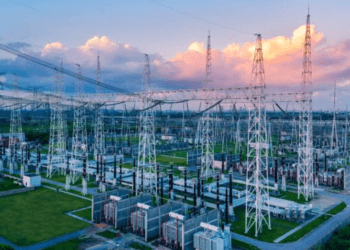
India’s short-term electricity trading market had a turbulent week as the final round of voting concluded across several crucial Indian states. Prices on India’s most active power trading platform, the Indian Energy Exchange, swung from Rs 6.76 per unit on April 28 to a low of Rs 2.17 per unit on May 3, before partially recovering to Rs 3.19 per unit by May 5. That is a 68% crash and partial recovery within eight days.
The explanation lies in three separate forces arriving at the same time.
First, the heat context. The week ending April 27 had been brutal, with India’s grid recording a single-day peak of 256 gigawatts, the highest of the year, as cooling demand surged across northern and western states. Average weekly demand that week touched 245 gigawatts, pushing exchange prices to elevated levels.
Then demand softened sharply. Norwesters, the pre-monsoon thunderstorms that sweep across eastern and southern India, brought rain and cooler temperatures to some of the country’s most power-hungry states. Simultaneously, Tamil Nadu, West Bengal, Assam and Puducherry held their final round of assembly elections on April 29, reducing industrial and commercial activity across a large part of the country. Average weekly demand fell to approximately 226.5 gigawatts, a drop of nearly 19 gigawatts from the previous week.
Supply did not fall with it. Renewable generation held steady, flooding the exchange with power that suddenly had fewer buyers. Prices collapsed.
The partial recovery to Rs 3.19 per unit by May 5 suggests the market has found a new short-term floor as election-related demand returns to normal. But for anyone investing in power generation, trading or distribution in India, this week was a reminder that exchange prices can move as fast as the weather changes.
Indian power exchanges supply short-term electricity to distribution companies and account for less than 10% of annual power consumption nationally, but their prices serve as a key real-time signal of supply and demand conditions across the grid.
Joules Capsule: Weekly Round-Up
India’s LPG Supply Stabilises as Tanker Clears Hormuz
India’s cooking gas situation continued to stabilise through April. The government confirmed no dry-out at any LPG distributor, with commercial supply restored to around 70% of normal levels. Over 2.15 lakh tonnes of commercial LPG were sold during the month, alongside approximately 11,100 tonnes of auto LPG and more than 23 lakh smaller five-kilogram cylinders. More than 10,000 awareness camps have been organised since early April to manage demand and prevent panic buying. In a significant development, the Indian LPG tanker Sarv Shakti has successfully exited the Hormuz danger zone after navigating past both the Iranian and US naval presence in the strait, signalling that safe passage remains possible for Indian vessels.
L&T Wins Contract for India’s First Indigenous Coal Gasification Plant
Engineering giant Larsen and Toubro has secured the construction contract for the coal-to-ammonium nitrate project at Lakhanpur in Odisha, awarded by Bharat Coal Gasification and Chemicals Limited, the joint venture of Coal India and Bharat Heavy Electricals Limited. The project, which we first covered when the land agreement was signed, has now moved from paperwork to active execution, as per the company statement. It remains India’s first coal gasification project using indigenously developed technology, and its progress is a meaningful step toward reducing the country’s dependence on imported chemicals and fertilisers.
Coal India Wins Battery Storage Order in Odisha
Coal India, better known as the country’s largest coal miner, has secured an order from Odisha’s state power transmission company to build a 320 megawatt-hour battery energy storage system across four locations in the state. The project, carrying a capacity of 80 megawatts dischargeable over four hours, will be completed within 18 months. The order signals Coal India’s active push to diversify beyond mining into the energy storage space, a strategically important move as India races to solve the evening grid stress that has defined this summer’s power crisis.
About the Author:
Sadananda Mohapatra is a veteran business journalist with decades of experience covering India’s energy, industry, and economic landscape. With stints at reputed financial news publications like The Business Standard & NewsWire18, he reported extensively on India’s power sector, minerals policy, coal and energy regulation, and industrial developments — building a deep, ground-level understanding of the global energy economy. His work spans corporate affairs, infrastructure, and policy analysis, with a particular focus on eastern India’s resource-rich industrial corridor. He currently writes on the global energy landscape through his newsletter, The Joule’s Stack.