

DBT Bureau
Pune, 26 Sep 2026
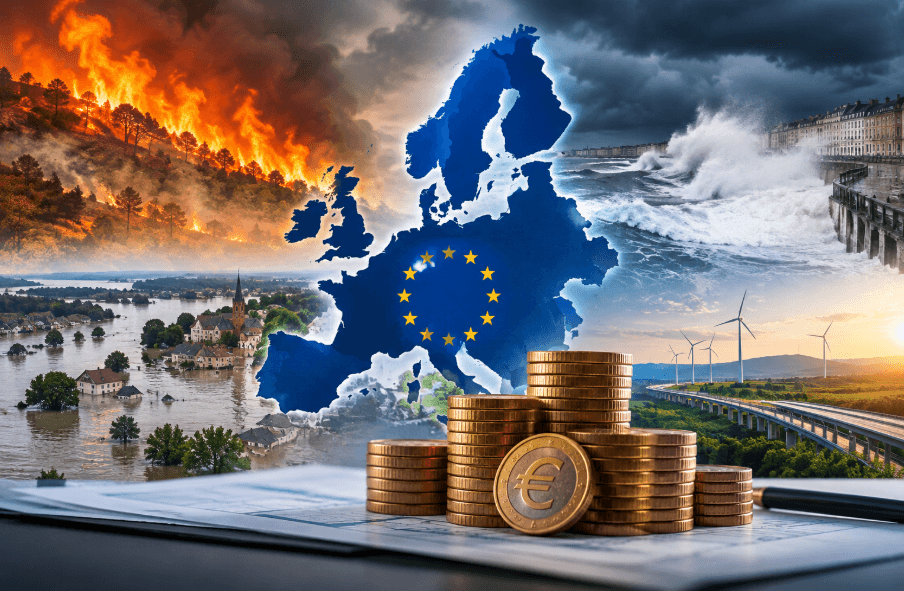
New Bloomberg Intelligence (BI) research finds that climate damage is turning into a prepare-and-repair spending cycle that could total about €500 billion through 2035, with EU and UK annual outlays projected to rise from €28.7 billion in 2026 to around €80 billion in 2035. With 2026 prepare-and-repair infrastructure spending projected at more than double the 2022 level, a developing super El Nino could accelerate investment.
BI’s Europe’s Climate Resilience Challenge 2026 – 2035 Outlook, finds that Europe’s position as the world’s fastest-warming continent is turning physical climate risk into a growing investment consideration. Europe’s climate costs are spreading beyond physical assets into output, margins and operating costs as extreme heat, water stress and storms disrupt agriculture, power, digital infrastructure and transport.
BI analysis suggests that European storms, fires and heat waves have taken losses, projected public outlays and heat-related productivity damage to a broader 2026 climate impact of about €85 billion, about 0.5% of European GDP.
Broker estimates put direct losses at €42.6 billion year to date through August, including €12 billion insured and €30.6 billion uninsured. BI analysis adds €28.7 billion of projected 2026 government prepare-and-repair infrastructure outlays tied to prior events and €13.8 billion of heat-related labor-productivity losses. Together, direct losses and projected public outlays point to as much as €71 billion of current and potential prepare-and-repair demand in 2026.
“Europe’s climate resilience challenge is increasingly becoming an investment opportunity. The economic impact is spreading beyond physical damage into productivity, food and energy prices, company earnings and credit risk,” said Grace Osborne, Sustainable Finance Analyst at Bloomberg Intelligence. “The need to make Europe’s infrastructure and economy more resilient is creating a multiyear investment cycle across areas including grids, buildings, cooling, water and agriculture.”
Key findings from the report include:
- Repair bills are turning into multiyear infrastructure orders: Flood damage has pushed Spain, Italy and Germany into rail, waterway and grid upgrades, while France has accelerated about €2.5 billion of grid hardening. The spending is already supporting contractors, rail specialists and equipment suppliers, including Schneider Electric and Nexans.
- Climate shocks are moving into operating costs: Low Rhine levels pushed barge rates to almost 12x February’s low, while heat-related nuclear outages helped push southeast European intraday power prices above €700/MWh.
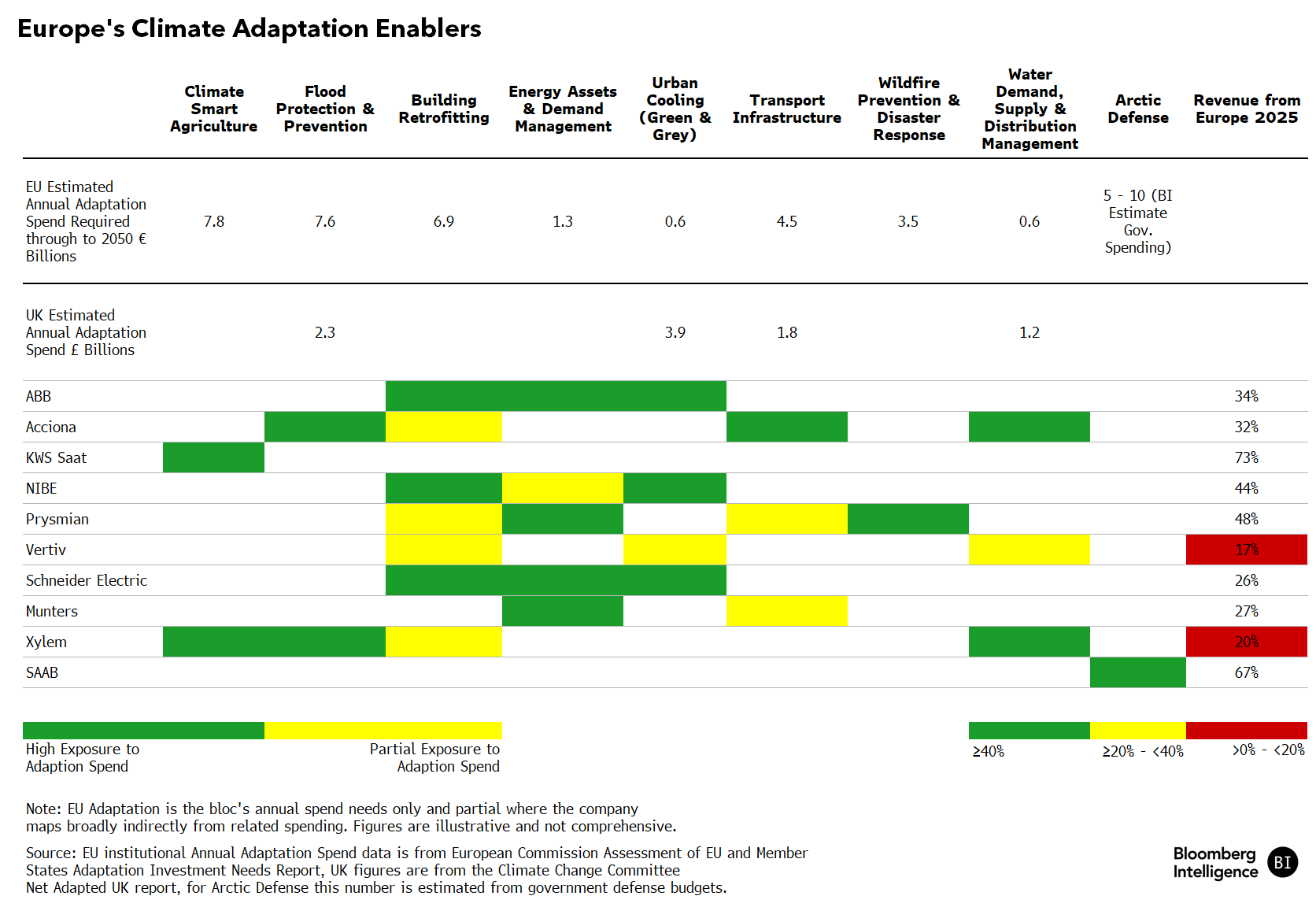
- Adaptation exposure reaches beyond conventional suppliers: Cooling, power and control systems used for climate resilience also serve data centers and electrification, adding another source of demand. Further, against a backdrop of diminishing sea ice and longer navigation seasons, a more navigable Arctic creates a security opportunity adjacent to conventional adaptation, supporting a separate channel for Saab’s submarine and underwater-network capabilities.
- Crop losses are pulling resilience spending forward: June heat wiped more than €2 billion from European grain revenue and pushed some summer-crop forecasts as much as 14% below five-year averages, increasing demand for resilient seeds, precision farming and irrigation. The total agricultural adaptation need is estimated at about €11.5 billion annually. KWS Saat, BASF and AGCO are among suppliers positioned to capture that spending, while water stress supports irrigation and reuse technologies from Netafim, Valmont and Xylem.
- Insurance reprices faster than long-dated bank credit: Only 39% of assessed global climate-related economic losses were insured over the past six years, while some climate-sensitive European residential-property loans extend beyond 20 years. BI estimates global non-damage business-interruption premiums could rise to $5-$11 billion by 2030 from about $3 billion in 2025, while bank disclosures show climate-sensitive lending across property, agriculture and power.
Source: Bloomberg Media Release