



DBT Bureau
Pune, 29 Sep 2026
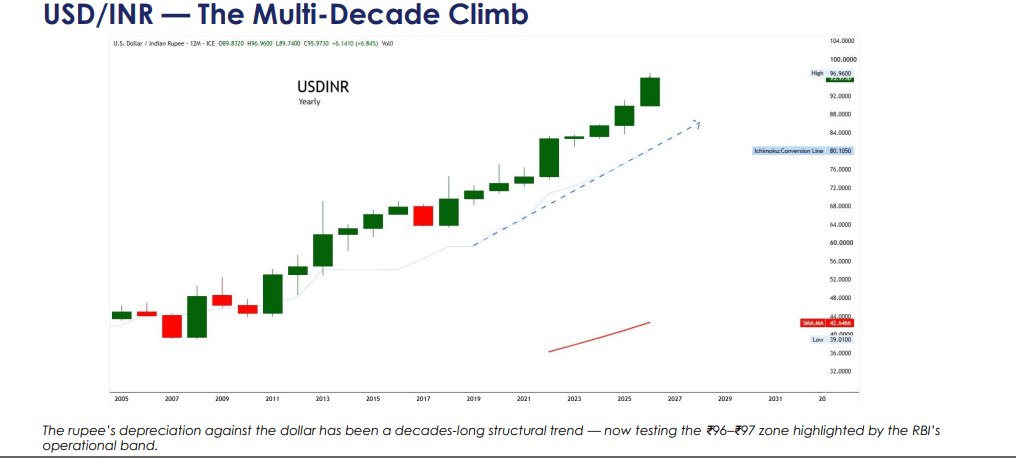
The Indian rupee remains under pressure near the ₹96-per-dollar level as expensive crude oil, rising US Treasury yields, foreign portfolio investor (FPI) outflows and an erratic monsoon create multiple challenges for the currency, according to Kedia Advisory’s USD/INR Market Note dated September 29, 2026.
The rupee closed at ₹95.9825 against the US dollar on September 28, despite India recording real GDP growth of 7.8% year-on-year in April-June FY2026-27. The report noted that strong domestic growth has not been enough to offset external pressures from dollar demand, the import bill, global interest rates and capital flows.
Crude oil adds pressure
Crude oil remains one of the biggest immediate risks for the rupee. Brent crude stood at $108.20 per barrel on September 28, up around 4% as hopes of de-escalation involving Iran faded. India imports around 85–88% of its crude oil requirement, meaning higher oil prices increase the dollar requirement of refiners and put additional pressure on the currency.
Higher crude prices could also increase transportation, manufacturing and fertiliser costs. If these pressures feed into consumer inflation, the RBI could have less room to cut interest rates, adding another challenge for the economy.
US yields and FPI outflows add to weakness
The rise in US Treasury yields is also making dollar-denominated assets more attractive to global investors. The 10-year US Treasury yield has moved above 5.2%, narrowing the relative return advantage of emerging markets and increasing pressure on Indian equities, bonds and the rupee.
Foreign selling is another concern. FPI equity outflows have reached ₹2.45 lakh crore in 2026 so far, including around ₹21,000 crore during the first part of September. Such selling creates direct dollar demand when foreign investors convert their rupee proceeds before repatriating funds.
Rupee risks remain tlted to weakness
Kedia Advisory expects USD/INR to remain in a ₹95.20–₹96.70 range over the next month. The report identifies ₹96.70 as an upper stress zone if crude prices rise further, Strait of Hormuz risks increase or FPI selling accelerates. It also states that the balance of risks remains tilted toward rupee weakness.
An erratic monsoon and El Niño risks could add further pressure through lower crop yields and higher food prices, potentially limiting the RBI’s room to cut rates.
Disclaimer: Any views, opinions, or investment-related information expressed by contributors on Databiztimes.com are solely their own and should not be construed as investment advice. Readers are advised to consult SEBI-registered or certified financial advisors before making any investment decisions.