


By Sadananda Mohapatra, Senior Business Journalist
Lead Story: India’s Grid Hits 271 GW — A Record That Reveals a Structural Problem
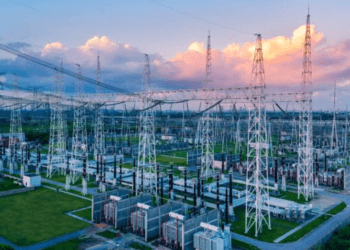
India’s national power grid broke its own all-time record four days in a row between May 18 and May 21, a streak that no amount of seasonal explanation can fully account for. Peak demand climbed from 257 gigawatts on May 18 to an unprecedented 271 gigawatts on May 21, the highest electricity demand ever recorded on India’s grid, driven by an intense heatwave pushing cooling loads to levels the system was not designed to sustain. The weekly average from May 18 to 25 came in at approximately 262 gigawatts.
The grid held. But the margins were thin. Seven states reported shortages on the record demand day, with evening deficits reaching 2.57 gigawatts after sunset when solar generation dropped away. The generation mix at the 271 gigawatt peak was revealing: thermal coal carried 62.8% of the load, solar contributed 22%, hydro 5.8% and wind 5%. Renewables performed well during daylight hours. The problem arrived, as it always does, after 6 pm.
This is the duck curve problem playing out at national scale. India has added enormous solar capacity, which serves daytime demand efficiently and cleanly. But when the sun sets, that capacity vanishes just as households across a hot country reach for their air conditioners simultaneously. Coal and gas plants must ramp up steeply and quickly to fill the gap, and on the most stressed days that ramp is not fast enough or large enough to prevent shortfalls.
The deeper issue is structural rather than seasonal. India’s economy is growing at over 7% annually, adding industrial load, urban cooling demand and new households to the grid every year. The summer of 2026 has demonstrated that installed generation capacity, while impressive on paper, does not guarantee reliable supply during the peak hours that matter most. Battery storage, which could shift surplus daytime solar to evening use, remains far too limited. Pumped hydro projects are progressing but slowly.
The stress of May 2026 is not a reason for alarm about India’s grid. It is a signal about where capital is needed most urgently: flexible storage, grid modernisation and demand response infrastructure. The record of 271 gigawatts will almost certainly be broken next summer. The question is whether the storage and flexibility to manage it will be in place by then.
Joules Capsule: Weekly Round-Up
India Strikes New Gas in Rajasthan
State-owned Oil India Limited has unlocked a new gas-bearing formation at its Dandewala field in Rajasthan, with natural gas flowing from the Sanu Formation for the first time at around 25,000 standard cubic metres per day. To put that in perspective, India currently consumes approximately 187 million standard cubic metres of natural gas every day, making this discovery equivalent to roughly 0.01% of daily national requirement. The find is symbolically important at a time when 65% of India’s gas supply from West Asian routes has been disrupted, but it underscores rather than solves the scale of India’s domestic production challenge.
India’s Cooking Gas Supply Holds Despite 90% LPG Import Disruption
The West Asia crisis has disrupted roughly 40% of India’s crude imports, 90% of its LPG supplies and nearly 65% of its natural gas from affected routes, the Ministry of Petroleum and Natural Gas confirmed on May 25. Despite that scale of disruption, domestic supply has held. Refinery-based LPG production has been ramped up to around 50,000 tonnes per day. On the piped gas front, nearly eight lakh connections have been gasified, with a further 2.87 lakh connections infrastructure-ready and over 8.27 lakh customers registered and waiting. The numbers suggest a supply chain under pressure but not broken.
Odisha Cuts IPP Power Obligation to Attract Thermal Investment
Odisha has amended its thermal power policy to reduce the mandatory power allocation that private power producers must sell to the state at variable cost, cutting it from 12 to 14% down to just 5% for all upcoming projects. The earlier provision effectively gave Odisha’s state power utility access to electricity at almost half the normal market price, making it one of the cheapest power sources available to the state. The amendment applies only to new projects, leaving existing arrangements unchanged. The government frames it as an investor-friendly reform to attract fresh thermal capacity at a time when India’s grid is under summer stress.
About the Author:
Sadananda Mohapatra is a veteran business journalist with decades of experience covering India’s energy, industry, and economic landscape. With stints at reputed financial news publications like The Business Standard & NewsWire18, he reported extensively on India’s power sector, minerals policy, coal and energy regulation, and industrial developments — building a deep, ground-level understanding of the global energy economy. His work spans corporate affairs, infrastructure, and policy analysis, with a particular focus on eastern India’s resource-rich industrial corridor. He currently writes on the global energy landscape through his newsletter, The Joule’s Stack.