


By Sadananda Mohapatra, Senior Business Journalist
Lead Story: Why India Chose UAE as Its Energy Supplier Amid the West Asia Crisis
India’s energy diplomacy had a revealing week. On May 15, Prime Minister Narendra Modi visited Abu Dhabi and signed two landmark agreements with Abu Dhabi National Oil Company: a long-term framework for LPG supply and trading between Indian Oil Corporation and ADNOC Global Trading, and a strategic arrangement to store up to 30 million barrels of UAE crude in India’s Strategic Petroleum Reserves. The timing was deliberate. One day later, Washington allowed its sanctions waiver on Russian seaborne crude to lapse, briefly cutting off India’s largest alternative supply source before extending it again for another 30 days on May 18.
That weekend of uncertainty, a 48-hour window when India’s Russian crude lifeline was technically suspended, illustrated precisely why New Delhi has been cultivating the UAE relationship so carefully.
The LPG and LNG components of the deal deserve particular attention given India’s ongoing cooking gas and fertiliser crisis. The agreement builds on an existing LPG term contract between Indian Oil Corporation and ADNOC in place since 2023, now expanded into long-term sale and purchase commitments with enhanced supply reliability clauses and potential joint shipping arrangements. For a country that imports roughly 60% of its LPG needs and has seen household cylinder supplies disrupted since the Strait of Hormuz effectively closed in late February, locking in reliable long-term volumes from a politically stable supplier is a meaningful security gain. The LNG cooperation element matters equally: natural gas is the primary feedstock for urea production, and India spent weeks earlier this year scrambling through spot markets to keep its fertiliser plants running. A structured long-term LNG arrangement with the UAE adds a layer of supply certainty that fortnightly spot purchases simply cannot provide.
India’s choice of the UAE as a strategic energy partner is not about volume. Saudi Arabia, Russia and Iraq all supply more crude. The UAE’s appeal lies in reliability, flexibility and alignment. When India needed storage for emergency petroleum reserves without spending foreign exchange upfront, Abu Dhabi National Oil Company agreed to park its own crude in Indian facilities and give India priority access during supply emergencies. Very few countries in the world have offered India that arrangement.
The Russian waiver extension buys India another 30 days of discounted crude access. India’s imports of Russian oil rose to a record 2.3 million barrels per day in May as refiners accelerated buying under the temporary authorisation. But the general licence has already lapsed twice without clarity on renewal, creating sustained uncertainty for Indian refiners planning their cargo schedules.
The UAE deal is India’s answer to that uncertainty. In an energy market where geopolitics can suspend supply relationships overnight, a partner that offers storage arrangements, long-term contracts, and logistical flexibility through Fujairah port is worth more than its production ranking suggests. India is not choosing the UAE because it produces the most. It is choosing the UAE because it can be counted on when others cannot.
Joules Capsule: Weekly Round-Up
Two LPG Tankers enroute India Clear the Strait of Hormuz
Two LPG carriers carrying cargo for India successfully crossed the Strait of Hormuz and are expected to arrive at Kandla and New Mangalore ports on May 16 and 18 respectively. The safe passage provides a measure of relief to India’s strained cooking gas supply chain, which has been under pressure since the strait’s effective closure in late February. While individual crossings are becoming more frequent, India continues to pursue long-term supply arrangements and alternative sourcing routes to reduce dependence on a corridor that remains operationally risky.
India Backs Coal Gasification With Rs 37,500 Crore
The Union Cabinet has approved a Rs 37,500 crore (approximately USD 4.5 billion) scheme to promote surface coal and lignite gasification projects, targeting the conversion of 75 million tonnes of coal into synthesis gas by 2030. The scheme directly addresses India’s import dependence across multiple critical sectors: India currently imports more than 50% of its LNG needs, nearly all of its ammonia requirements, and 80 to 90% of its methanol consumption. By converting domestically abundant coal into these industrial inputs, the government aims to insulate India from the kind of geopolitical supply disruptions that have defined the past three months. The scheme is expected to attract investments of up to Rs 3 lakh crore (approximately USD 36 billion) and generate 50,000 jobs in coal-bearing regions.
India’s Small Hydro Power Push With Rs 2,585 Crore plan
India has approved a five-year scheme to add 1,500 megawatts of small hydro power capacity between 2026 and 2031, backed by a government outlay of Rs 2,584 crore (approximately USD 310 million). Small hydro projects, typically ranging from one to 25 megawatts, are particularly valuable for powering remote and hilly regions where large grid infrastructure is difficult to build. Unlike solar and wind, small hydro generates power around the clock without storage requirements, making it a reliable baseload complement to India’s fast-growing but intermittent renewable capacity. The scheme brings a neglected but dependable clean energy source back into focus at a time when grid reliability is under intense pressure.
India’s Grid Sets New Peak as Summer Heat Intensifies
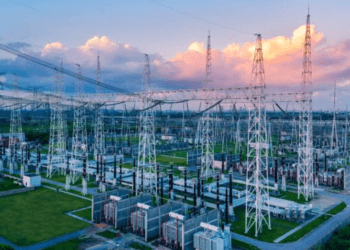
India’s power grid recorded its highest single-day peak of the season on May 18, touching nearly 258 gigawatts as summer heat spread across the country. The weekly average from May 12 to 18 came in at approximately 248 gigawatts, sharply higher than the 226.5 gigawatt average recorded just two weeks ago when election days and pre-monsoon thunderstorms had briefly cooled demand. The sustained climb signals that India’s grid is now in the most demanding stretch of the year with no meaningful relief expected before the monsoon arrives.
About the Author:
Sadananda Mohapatra is a veteran business journalist with decades of experience covering India’s energy, industry, and economic landscape. With stints at reputed financial news publications like The Business Standard & NewsWire18, he reported extensively on India’s power sector, minerals policy, coal and energy regulation, and industrial developments — building a deep, ground-level understanding of the global energy economy. His work spans corporate affairs, infrastructure, and policy analysis, with a particular focus on eastern India’s resource-rich industrial corridor. He currently writes on the global energy landscape through his newsletter, The Joule’s Stack.