

DBT Bureau
Pune, 27 Nov 2026
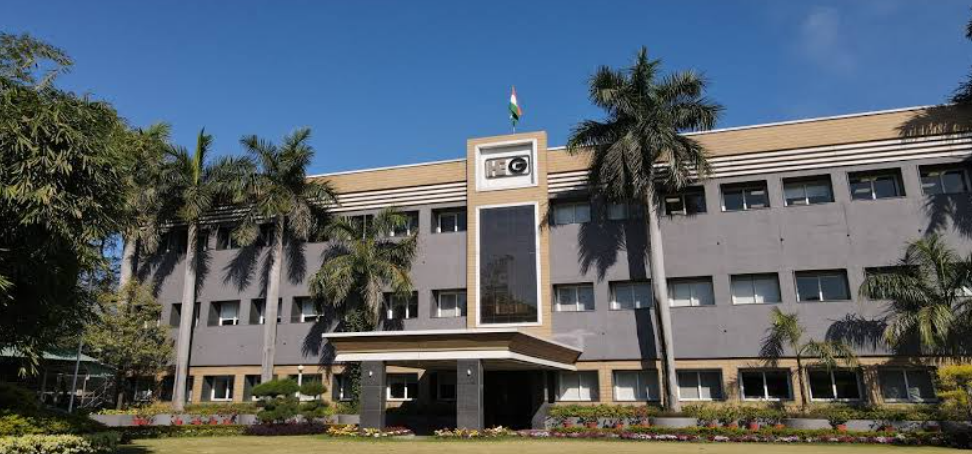
HEG Limited, an LNJ Bhilwara Group company, today listed its equity shares on the Bombay Stock Exchange and the National Stock Exchange of India Limited. The shares trade under the Scrip Code 544896 on BSE and the symbol [HEGRAPHITE] on NSE. The listing follows the demerger of the graphite electrodes business under the Composite Scheme of Arrangement sanctioned by the National Company Law Tribunal, Indore Bench, by its order dated August 13, 2026.
The Scheme took effect on September 1, 2026. Shareholders whose names appeared on the register as on the Record Date i.e., September 7, 2026, received one fully paid-up equity share of HEG Limited (Formerly known as HEG Graphite Limited) of face value Rs 2 each for every one equity share of face value Rs 2 each held in HEG Advanced Materials Limited (Formerly known as HEG Limited).
Commenting on this, Ravi Jhunjhunwala, Chairman, Managing Director and CEO, HEG Limited*, said, “Today HEG Limited begins trading as an independently listed company, but the business our shareholders own is the one they have known for nearly fifty years. The same plant, the same people and the same customer relationships now sit within a company focused entirely on graphite electrodes. discipline that has carried us through every cycle. This listing is the first step in a new chapter, and the work that our people have put in over nearly five decades gives us a strong foundation for it.”
Riju Jhunjhunwala, Vice-Chairman, HEG Limited*, said, “The listing gives shareholders a direct stake in one of the world’s leading graphite electrode businesses, with its own identity and its own capital priorities. Built in India and trusted by many of the world’s leading steelmakers, HEG has shown that quality can be built at scale in this country. As a focused listed company, HEG is well placed to pursue its next phase of strategic growth and to take Make in India further on the global stage.”
Manish Gulati, Executive Director, HEG Limited*, said,“ Electric arc furnaces make steel with a far smaller carbon footprint than blast furnaces, and every one of them depends on graphite electrodes. That makes our business an enabler of green steel. The company operates the world’s largest single-site Ultra High Power (UHP) graphite electrode manufacturing facility, at Mandideep in Madhya Pradesh, with an annual capacity of 100,000 tonnes which is being further expanded to 115,000 tons by early 2028.
It exports approximately 65 to 70% of its production to more than 35 countries and supplies many of the world’s leading steel companies. Besides focus on quality, our size and location provides us with cost-competitiveness to be able to ride through business cycles. The company runs an 18 MW captive hydro plant in Tawa and 6 MW solar plant in Mandideep, which give us clean and reliable power for a highly energy-intensive process. That power is central to our cost-competitiveness and to our commitment to sustainability. We are proud to take Indian manufacturing to many of the world’s leading steelmakers.”
Graphite electrodes are an essential consumable in Electric Arc Furnace (EAF) steelmaking, which emits approximately one-fourth of the carbon of the blast furnace route. EAF steelmaking is gaining ground globally, driven by economics, regulation and the need for lower-carbon steel, and more than 100 million tonnes of new EAF capacity is scheduled to come on stream outside China by 2030.
Supply cannot respond as easily. Outside China, no new company has entered the graphite electrode industry since in 1976.
To meet this demand, the Board has approved Rs 650 crore brownfield expansion at Mandideep, taking capacity from 100,000 to 115,000 tonnes per annum, with production targeted to commence in the first quarter of calendar year 2028. The expansion builds on existing infrastructure at less than half the capital intensity of a greenfield plant.
HEG Limited will continue to take Indian manufacturing to the world, serving steelmakers in more than 35 countries with the quality and reliability they have come to expect, as the industry moves steadily towards cleaner steelmaking.