


By Sadananda Mohapatra, Senior Business Journalist
India Rewrites Grid Rules for the Renewable Era
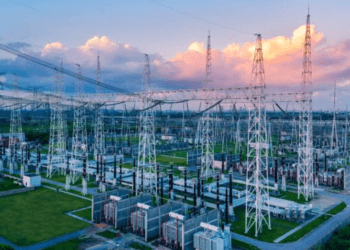
In the first quarter of 2026, India curtailed 300 GWh of renewable power, not because it lacked generation, but because its grid could not carry what its solar farms and wind parks were producing. In Rajasthan alone, over 4 GW of commissioned clean capacity sat stranded during peak solar hours. The Central Electricity Authority has now published draft regulations that go to the root of that problem: a grid connectivity code written in 2007 for a coal-dominated system, being rewritten for the first time in 19 years for a grid where solar and wind dominate generation.
The gap between the old rules and today’s grid is stark. When the 2007 regulations were framed, India had virtually zero utility-scale solar and negligible wind. Those rules assumed synchronous coal and hydro generators providing stable frequency and inertia. India now has 162 GW of solar and 57 GW of wind, technologies that connect through inverters rather than rotating machines, all governed by a connectivity code built for a world that no longer exists.
The draft regulations address this through four changes that matter. Solar, wind and battery storage are given their own dedicated technical chapter for the first time, with specific requirements for how they must respond to grid disturbances, staying connected through voltage dips and frequency swings rather than tripping offline and worsening instability. Battery Energy Storage Systems of 50 MW and above must now provide Black Start capability, meaning they must be able to help restart the grid after a complete blackout, formally elevating storage from a passive buffer to an active security instrument. Grid Forming control is formally recognised: a next-generation inverter mode that can independently maintain voltage and frequency, allowing renewable-heavy grids to stay stable without coal plants providing the traditional inertia anchor. And cybersecurity compliance with CERT-In and NCIIPC guidelines is now mandatory for all grid-connected assets, a new provision that reflects how digitally vulnerable an inverter-dominated grid has become.
The draft also provides a dedicated framework for hybrid generating stations, where solar, wind and storage are co-located behind a single connection point. This closes a regulatory gap that has been slowing the integrated projects that recent SECI tenders have been promoting and that transmission planners have been waiting on.
The stakes of getting this right are not abstract. Twenty gigawatts of renewable capacity currently face active connectivity delays. A 42% shortfall in transmission line commissioning against targets drove the curtailment crisis that these regulations are designed to prevent from recurring. Public comments close in early September, with finalisation expected before year end. Every month of delay is another month where India’s renewable generation races ahead of the rules governing how it reaches the grid.
Joules Capsules
SECI Discovers Rs 5.25 Per Unit Tariff for Round-the-Clock Green Power: Solar Energy Corporation of India’s latest round-the-clock (RTC) tender discovered a competitive tariff of Rs 5.25 per unit in a reverse auction. Speaking at the CII International Energy Conference, MNRE Secretary Santosh Kumar Sarangi highlighted that the tender benchmarks firm green power directly against thermal and nuclear generation. The framework requires developers to supply at least 90% power during peak hours and 70% across off-peak periods using integrated solar, wind, and storage configurations, marking a benchmark for data centers and commercial buyers seeking dispatchable clean energy.
Tamil Nadu Budget Commits Rs 18,860 Crore to Subsidies and Clean Energy Push:
Tamil Nadu’s 2026-27 budget allocated Rs 18,860 crore (~$2.25 billion) toward electricity subsidies, including doubling the free electricity entitlement from 100 to 200 units for eligible domestic consumers. The state announced a new Battery Energy Storage Systems Promotion Policy alongside a state Rooftop Solar Subsidy Scheme offering up to Rs 1 lakh per household in convergence with PM Surya Ghar. Infrastructure commitments feature 178 new substations, the replacement of 40,000 transformers, and 20,000 public EV charging stations over five years. Smart meters will be rolled out across Chennai and extended to 50 lakh industrial and commercial consumers across the state, reflecting a dual focus on grid modernisation and consumer affordability.
Andhra Pradesh Launches Bidding for 1,600 MW Thermal Power:
The Andhra Pradesh Electricity Regulatory Commission (APERC) granted in-principle approval for state discoms to initiate tariff-based competitive bidding for 1,600 MW of coal-based thermal capacity under the Design, Build, Finance, Own, and Operate (DBFOO) model. Marking the opening phase of a broader 5,588 MW thermal addition recommended by the Central Electricity Authority’s (CEA) Resource Adequacy Plan through FY 2035-36, the procurement aims to secure firm, dispatchable power for rising industrial demand and evening peak hours as the state expands its renewable energy footprint.
About the Author:
Sadananda Mohapatra is a veteran business journalist with decades of experience covering India’s emergy, industry, and economic landscape. With stints at reputed financial news publications like The Business Standard & NewsWire18, he reported extensively on India’s power sector, minerals policy, coal and energy regulation, and industrial developments — building a deep, ground-level understanding of the global energy economy. His work spans corporate affairs, infrastructure, and policy analysis, with a particular focus on eastern India’s resource-rich industrial corridor. He currently writes on the global energy landscape through his newsletter, The Joule’s Stack.