


DBT Bureau
Pune, 19 March 2026
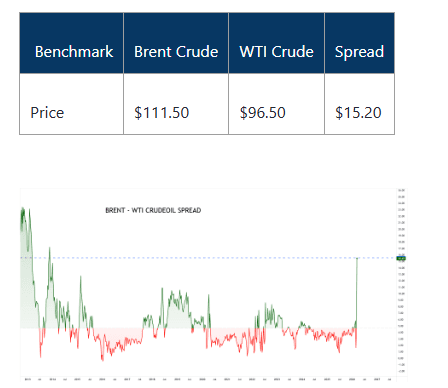
The price gap between Brent crude and WTI has widened significantly, reflecting heightened geopolitical tensions and supply disruptions in global oil markets. The spread, which measures the difference between the international benchmark Brent and U.S. benchmark WTI, has surged as Brent prices rally amid escalating risks in key shipping routes and energy infrastructure.
The “spread” represents the price difference between Brent (the international benchmark) and WTI (the U.S. benchmark). A widening spread means Brent is becoming significantly more expensive than WTI.
The “Strait of Hormuz” Crisis
The most immediate driver is the closure of the Strait of Hormuz in early March 2026. This followed military strikes involving the U.S., Israel, and Iran.
- Brent’s Exposure: Since Brent is a seaborne-traded waterborne crude, it is the primary benchmark for oil moving through international chokepoints. With roughly 20% of global oil demand (7–11 million barrels per day) at risk, Brent prices have rocketed toward $110/barrel.
- Infrastructure Attacks: Recent reports (March 18, 2026) of strikes on Iran’s South Pars gas field and Asaluyeh refinery facilities have shifted market fears from “transit delays” to “permanent infrastructure damage,” further inflating the Brent premium.
Comparison: 2013 vs. 2026
The last time the spread was this wide (late 2011 through 2013), the reasons were structural rather than purely geopolitical:
- In 2013: The spread was caused by the “Shale Revolution” outstripping the U.S. pipeline capacity. Oil was stuck in the Midwest because there weren’t enough pipes to get it to the Gulf Coast.
- In 2026: The spread is caused by global insecurity. The U.S. now has the pipes, but the “exit doors” to the rest of the world (international shipping lanes) are currently under threat or blocked.
Source: Kedia Advisory