

Athira Sethu
Kochi, 19 Feb 2026
India launched three new models of artificial intelligence (AI) at the India AI Impact Summit in New Delhi. These models are a part of the increasing efforts by the country to develop its own homegrown AI models, thereby cutting down on the reliance on international companies such as Google, Microsoft, and others who currently rule the market.
The launch of the new models is a part of the IndiaAI Mission, which was approved by the Indian government in March 2024. The initial budget for this mission is Rs 10,000 crore, which translates to approximately $1.2 billion. This is being used to develop India’s own AI capabilities. This includes developing foundational models, establishing large-scale computing infrastructure, and developing AI applications that can be used by the general public.
The mission has picked up pace over the last year. The government has provided subsidies for high-performance computing units, which aid in the training of AI models. Over Rs 100 crore has already been disbursed to promote AI startups, with several companies benefiting from this scheme.
Important AI Models Launched
During the summit, three leading Indian companies showcased their AI models, which are intended to be developed, trained, and deployed solely in India.
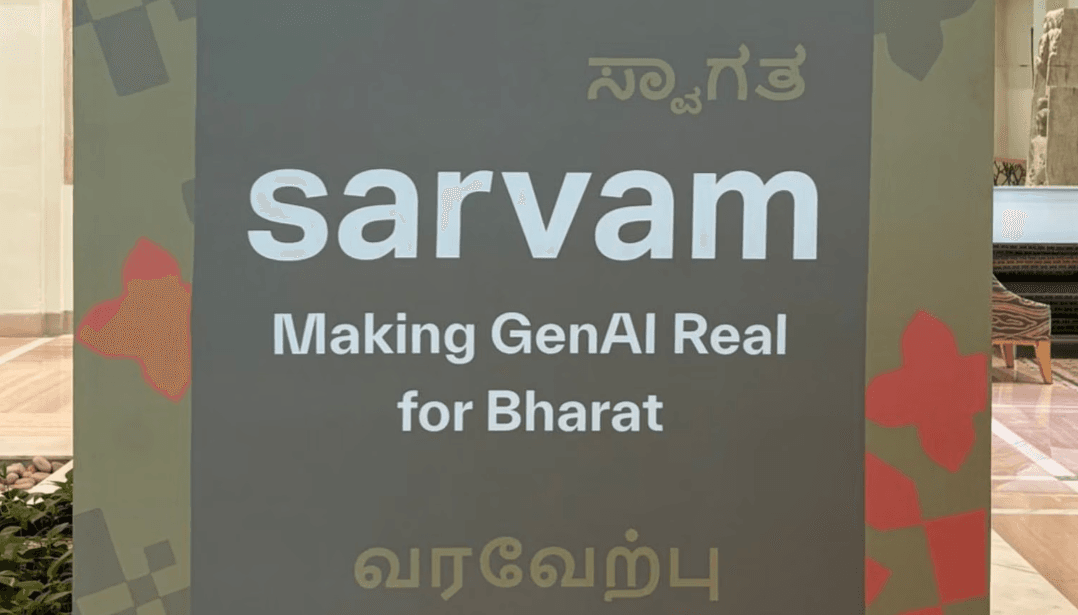
- Sarvam AI: This is a Bengaluru-based startup. The company launched two large language models (LLMs). The first one has 30 billion parameters, and the second one is much larger, with 105 billion parameters. These models were developed from scratch in India. According to the company, the larger model outperforms global AI models such as Google’s Gemini Flash and DeepSeek R1 in certain tests. Sarvam’s models are intended to perform complex tasks such as programming and AI-powered reasoning. The company highlighted the need for “sovereignty” in AI, which means that India should have complete control over its AI models and not depend on foreign companies for this purpose.
- Gnani.ai: This AI company launched Vachana TTS, a text-to-speech AI model that can clone human voices in 12 Indian languages. This AI model can replicate voice characteristics such as tone, pitch, and style, even in different languages. This model is most useful for applications in government services, customer service, and other large-scale systems, especially in regions with low internet bandwidth.
- BharatGen by IIT Bombay: The BharatGen initiative, launched by IIT Bombay, introduced a 17-billion-parameter AI model named ‘BharatGen Param2 17B MoE’. This AI model is specifically designed for various Indian languages and is applicable in areas such as governance, education, healthcare, agriculture, and the corporate sector. The model will be open-sourced by the BharatGen initiative, meaning that developers and corporations can use, develop, and create their own AI applications based on this model. The initiative received Rs 900 crore in funding from the IndiaAI Mission, making it the largest beneficiary of the government’s AI initiatives.
The Growing Importance of Local AI
During the summit, Google CEO Sundar Pichai emphasized India’s importance in the global AI ecosystem, appreciating the country’s intelligence and innovation. India is emerging as a leader in AI technology, focusing on developing AI models that cater to the needs of the country, rather than merely adopting AI models developed by global technology leaders.
This is a part of a larger strategy to make sure that India is not only a consumer of AI technology but also a producer. By developing indigenous AI models, India can gain better control over the data and tools that drive the country’s economy and society.